The LGR is entering a new chapter. Join us in shaping the next era of functional genomics!
x
From Biological Question to Actionable Insight

CRISPR Screening and Biological Discovery

The LGR can execute end-to-end functional genomics studies that integrate model development, genetic perturbation, advanced readouts, and computational analysis. Our automated infrastructure and multidisciplinary team enable robust, scalable screening solutions tailored to your scientific objectives.

End-to-End Screening Workflow

1. DESIGN

Build the strategy around the biology.

Define the biological question, perturbation strategy, model, assay, and readout best suited to the project.

2. DEVELOP

Establish a robust experimental system.

Engineer and optimize cellular models, introduce CRISPR machinery, and develop assays and phenotypic readouts.

3. SCREEN

Interrogate biology at scale.

Execute pooled or arrayed CRISPR screens spanning targeted and genome-wide applications using scalable workflows.

4. MEASURE

Capture complex phenotypes.

Integrate single-cell genomics, Perturb-seq, high-content imaging, flow cytometry, sequencing-based approaches, or other appropriate readouts.

5. ANALYZE & DISCOVER

Turn screening data into biological insight.

Apply computational approaches to analyze, visualize, and interpret functional genomics datasets and uncover biological mechanisms.

Build Confidence Before You Scale.

Not every project needs to begin with a large-scale screen. The LGR can structure functional genomics programs in phases, allowing teams to establish feasibility, optimize experimental conditions, and evaluate early results before progressing to larger studies.
Atom Illustration
FEASIBILITY

Establish the system

Evaluate the model, perturbation approach, assay, and readout to determine whether the experimental strategy is suitable for screening.

Test Tube Illustration
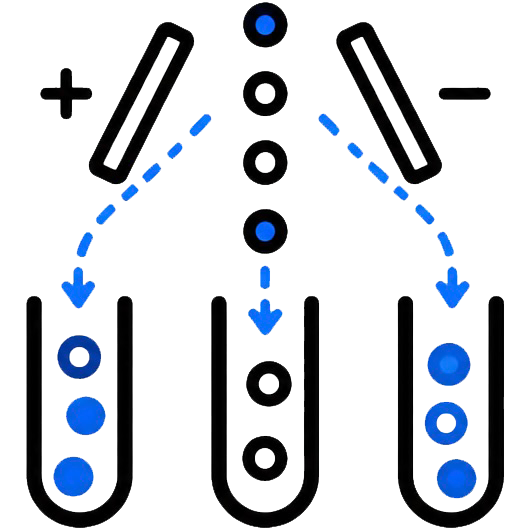
PILOT

Test the approach

Run a focused pilot to optimize key parameters, assess assay performance, and generate initial data before scaling.

Screening Icon
SCALE

Expand with Confidence

Advance to a targeted or genome-wide screen using an optimized experimental workflow.

Advanced Readouts for Deeper Biological Insight

We offer a broad range of phenotypic and molecular readouts, enabling multi-dimensional analysis of gene function.
Microscope Illustration
High-Content Imaging

Measure complex cellular phenotypes at scale. Automated imaging captures rich, quantitative information about cell morphology, structure, localization, and other phenotypic features across large numbers of perturbations.

  • Arrayed high-content imaging
  • Automated confocal imaging
  • Multiparametric phenotypic analysis
  • Live-cell or endpoint imaging
Library Generation Icon
Single-Cell & Perturb-seq

Resolve how genetic perturbations affect individual cells. Single-cell approaches connect genetic perturbations to transcriptional and cellular states, revealing heterogeneous responses and helping identify distinct cell populations, pathways, and mechanisms.

  • Single-cell RNA profiling
  • Perturb-seq workflows
  • Cell-state and population characterization
DNA Strands Icon
Sequencing-Based Readouts

Capture molecular responses to genetic perturbation. Sequencing-based approaches characterize molecular changes following perturbation and can be integrated with functional genomics screens to identify genes, pathways, and regulatory responses.

Flow Cytometry

Quantify cellular states and phenotypes across populations. Flow cytometry enables multiparametric measurement of cellular and molecular features across large cell populations, supporting phenotypic profiling, cell-state characterization, and FACS-based screening workflows.

  • Multiparametric phenotyping
  • Surface and intracellular marker analysis
  • Cell-state characterization
  • FACS-based screening and cell sorting
Background Shape

Biologically Relevant Models

The LGR has extensive experience applying functional genomics approaches across a range of model systems.
Immortalized Cell Lines
Primary Cells
iPSC-Derived Models
3D Models and Organoids
Capability #1

Beckman Echo acoustic dispensing

Capability #2

Hamilton STAR liquid handling

Capability #3

Automated colony picking

Capability #4

High-throughput plasmid preparation

Capability #5

Lentiviral production workflows

Capability #6

Integrated BSL-2 workcells

Screening at Scale

Our integrated automation and high-throughput infrastructure enables reproducible, scalable screening across a variety of formats and biological systems, from targeted studies to large-scale programs.
Pooled & Arrayed Screens

From targeted libraries to genome-wide studies

Automated Workflows

High-throughput execution with minimal variability

Scalable Infrastructure

Designed for pilot studies to large-scale projects

Capability #1

Beckman Echo acoustic dispensing

Capability #2

Hamilton STAR liquid handling

Capability #3

Automated colony picking

Capability #4

High-throughput plasmid preparation

Capability #5

Lentiviral production workflows

Capability #6

Integrated BSL-2 workcells

Advancing functional genomics research
Learn more about who we are, what we do, and why we do it.

Innovation Spotlight Speakers & Topics

Example of Screening Report
Dr. Han Yang — UCSF

"Single-Cell Prime Editing Screen Maps the Transcriptional Effects of Disease-Associated Variants"

Example of Screening Report
Dr. James Nuñez — UCB

"CRISPR Epigenome Editing for Functional Genomics and Therapeutics"

Example of Screening Report
Dr. Anna Molofsky — UCSF

"Single-Cell Prime Editing Screen Maps the Transcriptional Effects of Disease-Associated Variants"

Example of Screening Report
Dr. Roberto Zoncu — UCB

"CRISPR Epigenome Editing for Functional Genomics and Therapeutics"

Example of Screening Report
Dr. Martin Kampmann — UCSF

"Single-Cell Prime Editing Screen Maps the Transcriptional Effects of Disease-Associated Variants"

Example of Screening Report
Dr. Viviana Salinas-Rios — UCB

"CRISPR Epigenome Editing for Functional Genomics and Therapeutics"

Example of Screening Report
Dr. Zev Gartner — UCSF

"Single-Cell Prime Editing Screen Maps the Transcriptional Effects of Disease-Associated Variants"

Example of Screening Report
Dr. Michael McManus — UCSF

"CRISPR Epigenome Editing for Functional Genomics and Therapeutics"

Example of Screening Report
Dr. Alanna Schepartz — UCB

"Single-Cell Prime Editing Screen Maps the Transcriptional Effects of Disease-Associated Variants"

Example of Screening Report
Dr. Daniel Fletcher — UCB

"CRISPR Epigenome Editing for Functional Genomics and Therapeutics"

Background Shape

Integrated Analysis & Interpretation

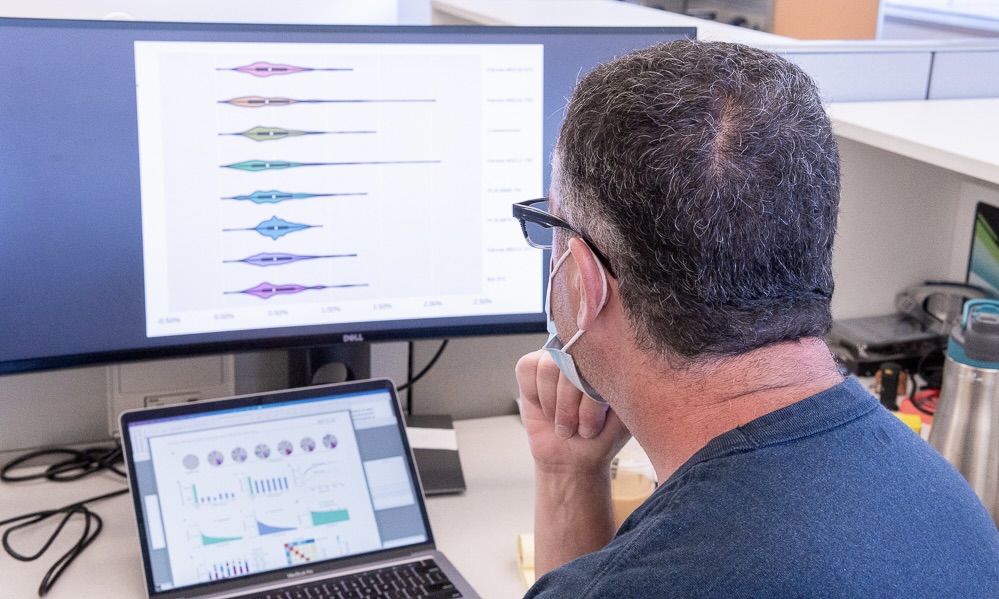
Our data scientists work closely with experimental teams to analyze, visualize, and interpret complex screening datasets.
  • Bulk and single-cell sequencing analysis
  • Image analysis pipelines
  • Data integration and visualization
  • Biological interpretation and hypothesis generation
Background ShapeBackground ShapeBackground ShapeBackground Shape

Capabilities

Automation Suite for CRISPR Library Generation and Screening

Manually executing large-scale CRISPR screens is a labor-intensive process prone to human error. At the LGR, we've automated this process by leveraging advanced platforms to generate custom-made libraries at scale with reproducible standards. These libraries, combined with disease-relevant cell models in imaging-based CRISPR screens, yield data-rich phenotypic information that we pair with AI/ML-driven analysis. By providing these cutting-edge resources, we empower researchers to advance scientific discovery and improve drug development in ways that go beyond the capabilities of individual labs.
Library Generation Icons
Custom library generation
Leveraging our collective expertise in automation, the LGR has developed a platform that streamlines the creation of custom arrayed and pooled genome-wide CRISPR guide libraries in both plasmid and lentiviral forms.
Screening Icon
High throughput automation
We’ve automated processes starting with arrayed library cloning, followed by the generation of functionally titered arrayed lentivirus libraries, and culminating in high-content screening platforms that deliver high-dimensional phenotypic data.
Example of Screening Report
Neurites

Customized Screens with Sophisticated Readouts

Successful functional genomics experiments depend on selecting the right system for the biology. At LGR, we design and implement custom, CRISPR-based screening platforms by optimizing cell models, libraries, and assays. These platforms enable translation of complex genetic datasets into actionable therapeutic insights.
Cell Plate Icon
Biologically-relevant cell-based models
We develop disease-specific cell models using iPSC-derived systems to capture the underlying biology and mechanisms of action.
Microscope Icon
High-content imaging screens
We combine microscopy-based screening with advanced computational analysis to quantify morphological and intracellular changes, enabling deeper insight into disease biology.
Single Cell Icon
Single-cell genetic perturbation capabilities
We integrate single-cell transcriptomic readouts with CRISPR perturbations to generate high-resolution functional maps of gene activity and cellular response.

Standardizing the CRISPR toolset

Manually executing large-scale CRISPR screens is a laborious, time-intensive process subject to human error. The LGR is investing in automation platforms that generate custom-made libraries at scale with reproducible standards. These libraries, when combined with disease-relevant cell models in imaging-based CRISPR screens, will yield data-rich phenotypic information that can be paired with AI/ML-based analysis. Such resources will provide opportunities to advance research and improve drug discovery in ways that would be challenging in individual labs.
Lab Beakers Icon
Standardization of existing protocols
The LGR is establishing broadly applicable quality control metrics to develop the best in-field practices that can be shared and disseminated.
DNA Strands Icon
Improving guide libraries
Guide libraries are a critical component of CRISPR screens. By increasing the quality of libraries, we are able to decrease experiment cost and improve screen sensitivity.
CRISPR Lab tools laid out on desk

What’s Next Starts With the Right Question.

Tell us what you are working on. We can help identify the expertise, technologies, and approach that best fit your research.