The LGR is entering a new chapter. Join us in shaping the next era of functional genomics!
x

LGR Innovation Showcase 2026

NOV. 4th, 2026 | 12:30-7:30pm

Hoffman Auditorium, 490 Illinois Street, San Francisco, CA 94158
Join us at the 2026 Laboratory for Genomics Research Innovation Showcase!


A vibrant event for visionaries from academic and industry to explore emerging technologies, scientific discoveries, and new opportunities for collaboration in functional genomics.

Registration: Our in-person registration is closed. Zoom-only option available. Please indicate if you are interested in joining the in-person waitlist.
Register Here

46

Principal Investigators

31

Research Projects

52

Published Papers

112k

Samples Tested

The Laboratory of Genomics Research Innovation Showcase

The inaugural LGR Innovation Showcase brings together researchers, technology developers, and industry partners to explore emerging approaches in functional genomics and their applications to biological discovery and therapeutic development.

Join us for scientific and technology lightning talks, discussions with leaders in genome engineering, a poster session, and opportunities to connect with researchers across UCSF, UC Berkeley, and the broader biotechnology community.

Planning to join us in person? Please register by September 18, 2026. In-person registration will close after this date.
Register Here
Background Shape
OUR EVENTS

Showcase Schedule

12:30 - 1:00 PM
Registration
1:00 - 1:10 PM
Welcome Address
Welcome Address from Dr. Jeremy Reiter, UCSF
1:10 - 1:20 PM
Leadership Message
Leadership Message from Dr. Geeta Narlikar, UCSF
1:20 - 2:00 PM
Research Overview
Laboratory for Genomics Research Overview from Dr. Alex Brown and LGR Team Members
2:00 - 3:00 PM
Innovation Spotlights I
Featuring:
Dr. Anna Molofsky, UCSF
Dr. Roberto Zoncu, UC Berkeley
Dr. Martin Kampmann, UCSF
Dr. Han Yang, UCSF
Dr. Daniel Fletcher, UC Berkeley
View Topics
3:00 - 3:15 PM
Break
3:15 - 4:15 PM
Fireside Chat
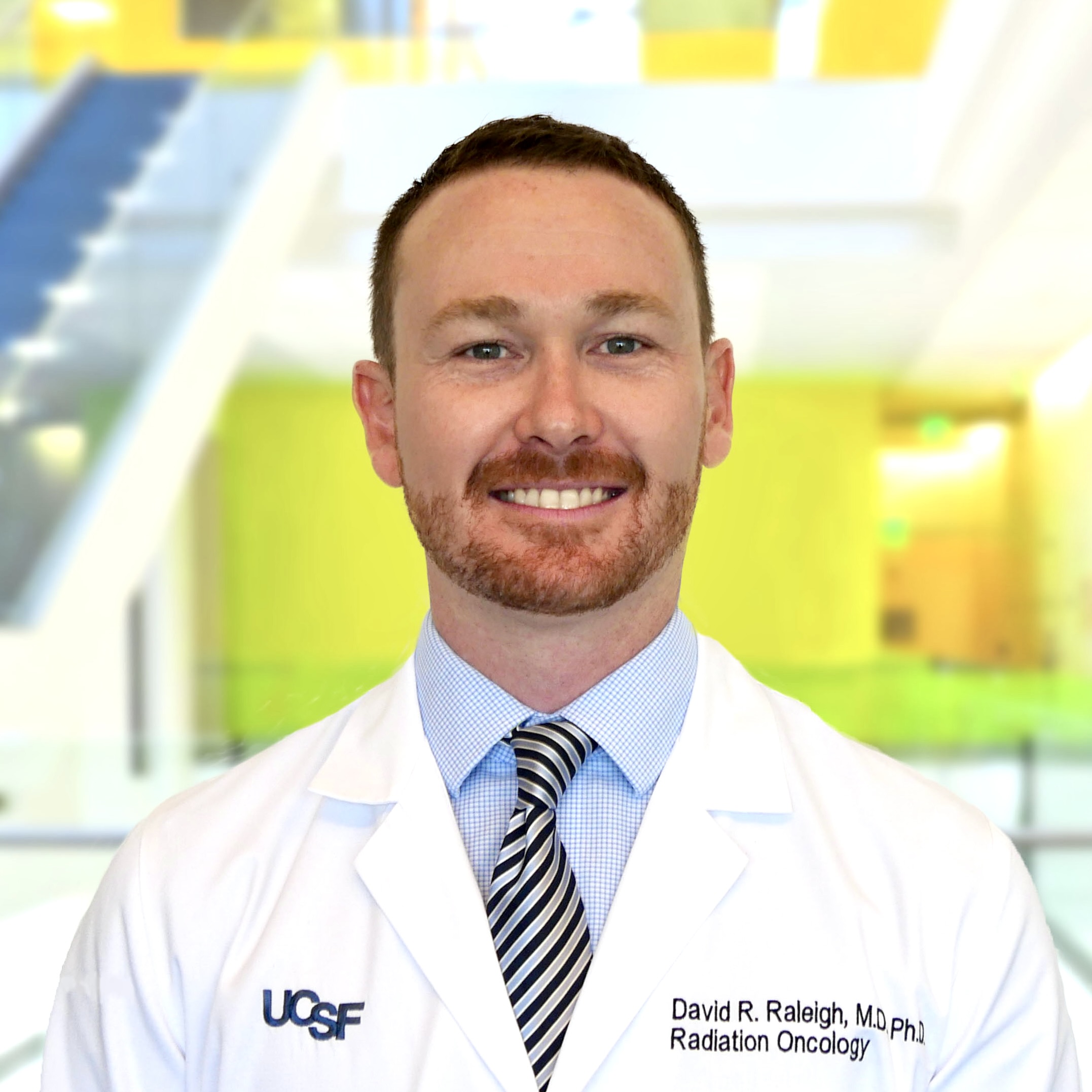
Featuring Dr. Jennifer Doudna, Dr. David Raleigh, and Dr. Hani Goodarzi, hosted by Dr. Alex Brown
View Speakers
4:15 - 5:15 PM
Innovation Spotlights II
Featuring:
Dr. Viviana Salinas-Rios, UC Berkeley
Dr. Zev Gartner, UCSF
Dr. James Nuñez, UC Berkeley
Dr. Michael McManus, UCSF
Dr. Alanna Schepartz, UC Berkeley
View Topics
5:15 - 5:30 PM
Closing Remarks
5:30 - 7:30 PM
Reception
Poster Session & Networking Reception — Topaz Room
Advancing functional genomics research
Learn more about who we are, what we do, and why we do it.
Background ShapeBackground Shape

Fireside Chat Speakers

Example of Screening Report
Jennifer Doudna, PhD

HHMI Investigator, Li Ka Shing Chancellor's Chair in Biomedical and Health Sciences, Professor of the Depts. of Molecular & Cell Biology and Chemistry, Founder of Innovative Genomics Institute

Example of Screening Report
David Raleigh, MD, PhD

Michael McDermott, MD Endowed Professor, Director of Translational Meningioma Program, Principal Investigator at UCSF Brain Tumor Center, Co-Vice Chair of Brain Tumor Committee at NRG Oncology

Example of Screening Report
Hani Goodarzi, PhD

Core Investigator at Arc Institute, Associate Professor at UCSF, Virtual Cell Initiative at Arc Institute, Founder of Network Bio, Tahoe Therapeutics & Therna Biosciences

Example of Screening Report
Host: Alex Brown, PhD | LGR

Scientific Director of the Laboratory for Genomics Research (LGR), UCSF Assistant Adjunct Professor in Biochemistry and Biophysics

Innovation Spotlight Speakers & Topics

Example of Screening Report
Dr. Han Yang — UCSF

"Single-Cell Prime Editing Screen Maps the Transcriptional Effects of Disease-Associated Variants"

Example of Screening Report
Dr. James Nuñez — UCB

"CRISPR Epigenome Editing for Functional Genomics and Therapeutics"

Example of Screening Report
Dr. Anna Molofsky — UCSF

"Single-Cell Prime Editing Screen Maps the Transcriptional Effects of Disease-Associated Variants"

Example of Screening Report
Dr. Roberto Zoncu — UCB

"CRISPR Epigenome Editing for Functional Genomics and Therapeutics"

Example of Screening Report
Dr. Martin Kampmann — UCSF

"Single-Cell Prime Editing Screen Maps the Transcriptional Effects of Disease-Associated Variants"

Example of Screening Report
Dr. Viviana Salinas-Rios — UCB

"CRISPR Epigenome Editing for Functional Genomics and Therapeutics"

Example of Screening Report
Dr. Zev Gartner — UCSF

"Single-Cell Prime Editing Screen Maps the Transcriptional Effects of Disease-Associated Variants"

Example of Screening Report
Dr. Michael McManus — UCSF

"CRISPR Epigenome Editing for Functional Genomics and Therapeutics"

Example of Screening Report
Dr. Alanna Schepartz — UCB

"Single-Cell Prime Editing Screen Maps the Transcriptional Effects of Disease-Associated Variants"

Example of Screening Report
Dr. Daniel Fletcher — UCB

"CRISPR Epigenome Editing for Functional Genomics and Therapeutics"

Background Shape

Explore What’s Possible with the LGR

The Laboratory for Genomics Research (LGR) is a collaborative research institute at the intersection of functional genomics, technology development, and disease biology.

Founded in 2019 by Jennifer Doudna, Jonathan Weissman, and Hal Barron through a collaboration between UC Berkeley, UCSF, and GSK, LGR was established to advance functional genomics technologies and apply them at a scale capable of uncovering new biology.

Today, LGR is expanding its disease-area expertise, advancing CRISPR-based technologies, and broadening access to its capabilities across the scientific community.

Built for End-to-End Functional Genomics

DNA Strands Icon
CRISPR Screening

Genome-scale and targeted perturbation to systematically interrogate gene function.

  • Pooled and arrayed screening
  • CRISPR knockout, interference, and activation
  • Targeted panels and genome-wide approaches
Library Generation Icon
Custom Libraries

Build the perturbation tools around the scientific question.

  • Custom pooled and arrayed library design and construction
  • Single- and dual-guide strategies
  • Targeted and genome-wide libraries
  • Plasmid, glycerol, and lentiviral outputs
  • Optimized, high-uniformity, low-skew libraries
Screening Icon
Automation

Scale complex biology with integrated, reproducible workflows.

  • High-throughput liquid handling
  • Automated colony picking
  • Library construction and cell-based workflows
  • BSL-2 automated workcells
  • Parallel processing
  • Scalable screening infrastructure
Microscope Illustration
Advanced Readouts

Measure the cellular and molecular consequences of genetic perturbation.

  • Arrayed high-content imaging
  • Flow cytometry and FACS
  • Single-cell genomics and Perturb-seq
  • Sequencing-based readouts
  • Multiparametric phenotyping
  • Complex cellular phenotypes
Data Science & Interpretation

Turn high-dimensional screening data into biological insight.

  • Screen analysis and hit prioritization
  • Bulk and single-cell sequencing analysis
  • Image analysis
  • Data integration and visualization
  • Biological interpretation
Background Shape

Ways to Engage

Sponsored Research

Build an ambitious research program with LGR.

Partner with our multidisciplinary team on customized, discovery-driven research programs that combine functional genomics expertise, advanced technologies, and scalable infrastructure around your scientific objectives.

Academic Partnerships

Bring functional genomics expertise into your research program.

Work with LGR to strengthen academic research and grant-funded programs through study design, pilot data generation, functional genomics expertise, and collaborative scientific support.

Recharge Services

Access LGR capabilities for defined research needs.

Engage LGR for established services with defined scope, deliverables, and timelines—from CRISPR library and reagent generation to functional genomics screening and related experimental support.

Thank you to our sponsors

We gratefully acknowledge the organizations supporting the inaugural LGR Innovation Showcase.
Interested in supporting the LGR or the Innovation Showcase?
Contact Amy Gryshuk at amy.gryshuk@ucsf.edu or Hannah Maneri at hannah.maneri@ucsf.edu.

Transit Options

Getting There

For those registered for in-person attendance:

Hoffman Auditorium
490 Illinois Street
San Francisco, CA

The Hoffman Auditorium is located inside the Wayne and Gladys Valley Center for Vision at 490 Illinois Street on the UCSF Mission Bay campus.

Use the main entrance at 490 Illinois Street.

Enter the Wayne and Gladys Valley Center for Vision and follow LGR Innovation Showcase signage to the William & Ruth Hoffman Auditorium.

Public Transportation

UCSF Mission Bay is accessible by Muni and UCSF shuttle service. Attendees using public transit should allow additional time for the short walk to the Valley Center for Vision.

Shuttle Map & Schedules: View Here

Muni:
The Wayne and Gladys Valley Center for Vision is accessible via the following Muni Metro and bus routes:
- 22: 18th St. and 3rd St. stop
- 55: 16th St. & 4th St. stop
- 91: 3rd St. & Mariposa St. stop
- T-Third Street line: UCSF Medical Center & Mariposa St. stop

Parking

UCSF Illinois Street Garage

590 Illinois Street
San Francisco, CA 94107

There are also other nearby UCSF parking garages, including:

Third Street Garage
1630 3rd Street

Owens Street Garage
1835 Owens Street

Metered street parking is also available locally. Please carefully read parking and street-cleaning signs.

Background Shape
Background ShapeBackground ShapeBackground ShapeBackground Shape

Capabilities

Automation Suite for CRISPR Library Generation and Screening

Manually executing large-scale CRISPR screens is a labor-intensive process prone to human error. At the LGR, we've automated this process by leveraging advanced platforms to generate custom-made libraries at scale with reproducible standards. These libraries, combined with disease-relevant cell models in imaging-based CRISPR screens, yield data-rich phenotypic information that we pair with AI/ML-driven analysis. By providing these cutting-edge resources, we empower researchers to advance scientific discovery and improve drug development in ways that go beyond the capabilities of individual labs.
Library Generation Icons
Custom library generation
Leveraging our collective expertise in automation, the LGR has developed a platform that streamlines the creation of custom arrayed and pooled genome-wide CRISPR guide libraries in both plasmid and lentiviral forms.
Screening Icon
High throughput automation
We’ve automated processes starting with arrayed library cloning, followed by the generation of functionally titered arrayed lentivirus libraries, and culminating in high-content screening platforms that deliver high-dimensional phenotypic data.
Example of Screening Report
Neurites

Customized Screens with Sophisticated Readouts

Successful functional genomics experiments depend on selecting the right system for the biology. At LGR, we design and implement custom, CRISPR-based screening platforms by optimizing cell models, libraries, and assays. These platforms enable translation of complex genetic datasets into actionable therapeutic insights.
Cell Plate Icon
Biologically-relevant cell-based models
We develop disease-specific cell models using iPSC-derived systems to capture the underlying biology and mechanisms of action.
Microscope Icon
High-content imaging screens
We combine microscopy-based screening with advanced computational analysis to quantify morphological and intracellular changes, enabling deeper insight into disease biology.
Single Cell Icon
Single-cell genetic perturbation capabilities
We integrate single-cell transcriptomic readouts with CRISPR perturbations to generate high-resolution functional maps of gene activity and cellular response.

Standardizing the CRISPR toolset

Manually executing large-scale CRISPR screens is a laborious, time-intensive process subject to human error. The LGR is investing in automation platforms that generate custom-made libraries at scale with reproducible standards. These libraries, when combined with disease-relevant cell models in imaging-based CRISPR screens, will yield data-rich phenotypic information that can be paired with AI/ML-based analysis. Such resources will provide opportunities to advance research and improve drug discovery in ways that would be challenging in individual labs.
Lab Beakers Icon
Standardization of existing protocols
The LGR is establishing broadly applicable quality control metrics to develop the best in-field practices that can be shared and disseminated.
DNA Strands Icon
Improving guide libraries
Guide libraries are a critical component of CRISPR screens. By increasing the quality of libraries, we are able to decrease experiment cost and improve screen sensitivity.
CRISPR Lab tools laid out on desk

What’s Next Starts With the Right Question.

Tell us what you are working on. We can help identify the expertise, technologies, and approach that best fit your research.