The LGR is entering a new chapter. Join us in shaping the next era of functional genomics!
x
From Design to Screen-ready Reagents

CRISPR Libraries & Viral Production

The LGR works with partners to design and produce custom CRISPR libraries for pooled and arrayed functional genomics applications. Our integrated automation and production infrastructure enables high-quality, scalable library and viral reagent generation tailored to your experimental goals.
Custom CRISPR Libraries

Libraries Designed Around Your Biological Question

We work with you to design and construct CRISPR libraries optimized for your model system, screening strategy, and biological questions. Our workflows support both pooled and arrayed formats, with plasmid and lentiviral outputs ready for downstream applications.
Library Design

Custom pooled and arrayed designs, including genome-wide and targeted panels

Library Construction

High-quality, low-skew libraries

Viral Production

Lentiviral packaging and titration for pooled and arrayed guide libraries

Flexible Formats

Glycerol, plasmid and lentiviral outputs to support your downstream applications

Library Quality

More Uniform Libraries. More Possibilities.

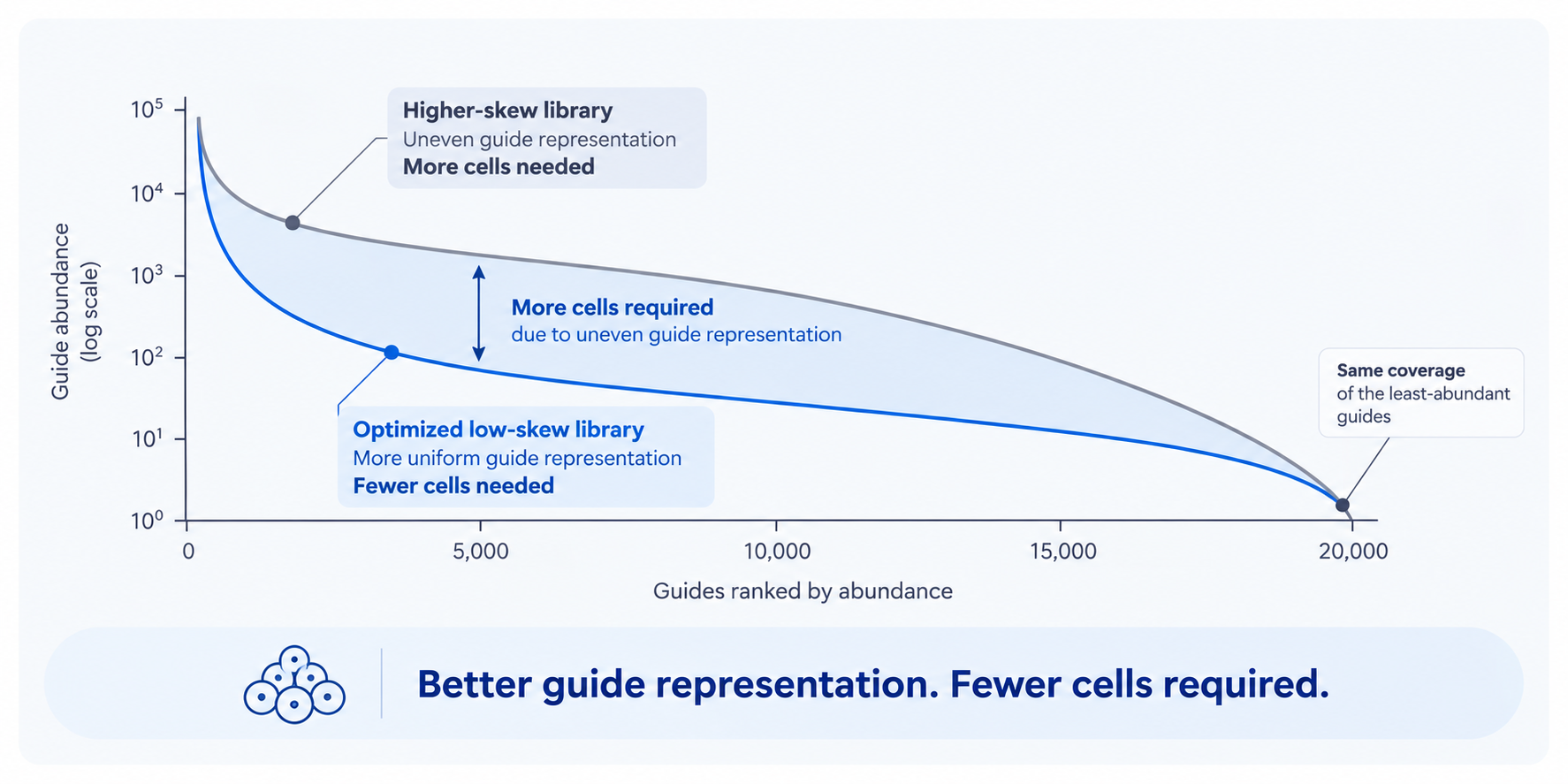
Library skew reflects how unevenly guides are represented within a pooled library. High skew can leave some guides underrepresented or lost, increasing the cell numbers needed to maintain adequate library coverage.

The LGR Method

The LGR developed an optimized cloning approach that produces high-uniformity, low-skew CRISPR libraries, helping preserve guide representation at lower cell coverage.
1. Lower Skew
2. Better Representation
3. Few Cells Required
Read The Research
Beaker and Magnifying Glass Illustration
Coverage

More uniform representation helps ensure the intended guide population is carried forward into the experiment

Test Tubes Illustration
Reproducibility

A well-represented library reduces one source of technical variability between screens.

Single Cell Icon
Screen Performance

A high-quality starting library helps preserve the diversity needed to detect meaningful biological effects downstream

Built for Scale

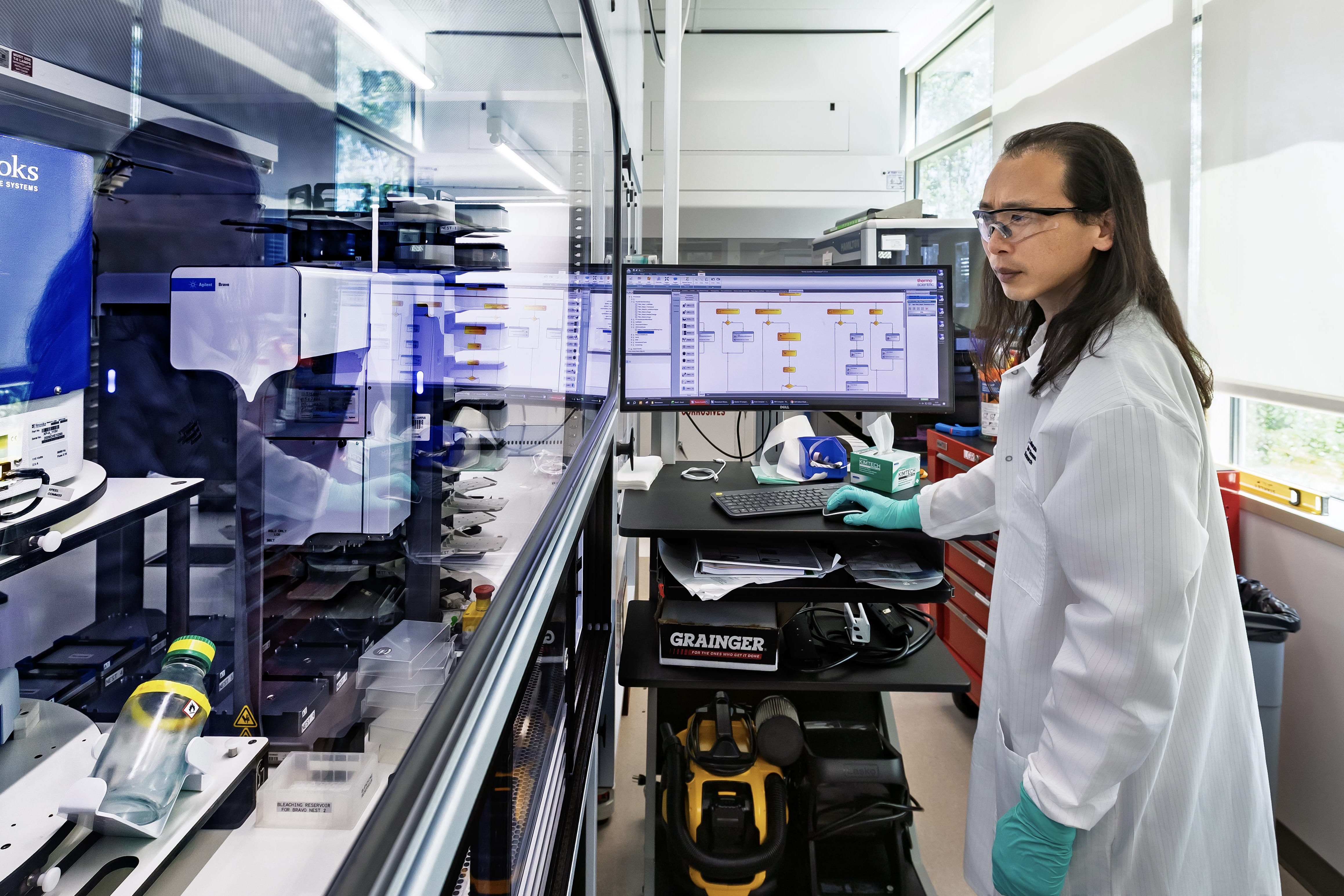
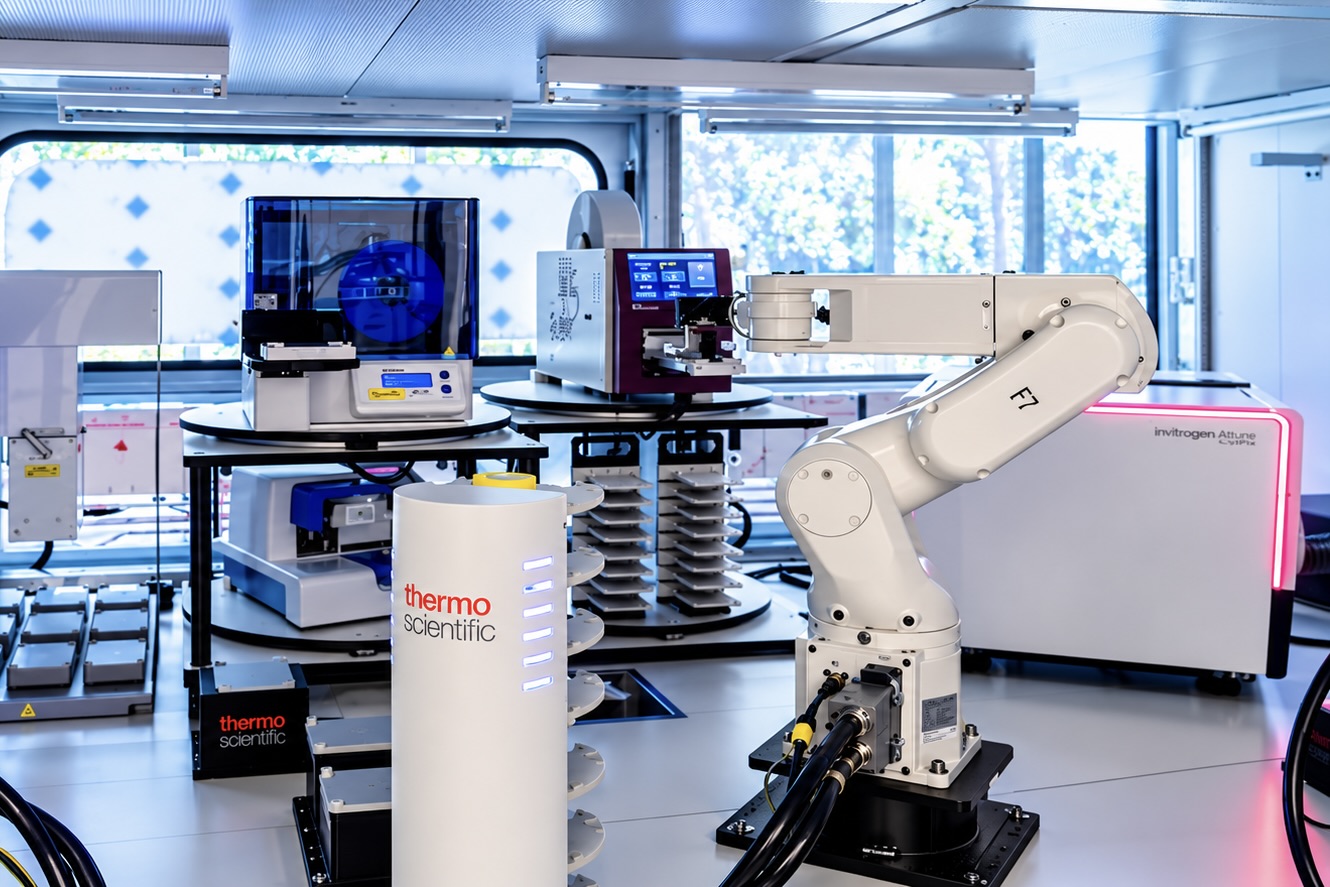
The LGR has built and optimized automated workflows supporting high-throughput library construction, plasmid preparation, and lentivirus production.

Our integrated infrastructure supports:
  • Custom pooled and arrayed library design and construction
  • Targeted and genome-wide
  • CRISPR knockout, interference, and activation approaches
  • Single- and Dual-guide strategies
  • Glycerol, plasmid, and lentiviral outputs
Capability #1

Beckman Echo acoustic dispensing

Capability #2

Hamilton STAR liquid handling

Capability #3

Automated colony picking

Capability #4

High-throughput plasmid preparation

Capability #5

Lentiviral production workflows

Capability #6

Integrated BSL-2 workcells

Featured Capabilities

  • Beckman Echo acoustic dispensing
  • Hamilton STAR liquid handling
  • Automated colony picking
  • High-throughput plasmid preparation
  • Lentiviral production workflows
  • Integrated BSL-2 viral production & screening workcell
Capability #1

Beckman Echo acoustic dispensing

Capability #2

Hamilton STAR liquid handling

Capability #3

Automated colony picking

Capability #4

High-throughput plasmid preparation

Capability #5

Lentiviral production workflows

Capability #6

Integrated BSL-2 workcells

Advancing functional genomics research
Learn more about who we are, what we do, and why we do it.

Innovation Spotlight Speakers & Topics

Example of Screening Report
Dr. Han Yang — UCSF

"Single-Cell Prime Editing Screen Maps the Transcriptional Effects of Disease-Associated Variants"

Example of Screening Report
Dr. James Nuñez — UCB

"CRISPR Epigenome Editing for Functional Genomics and Therapeutics"

Example of Screening Report
Dr. Anna Molofsky — UCSF

"Single-Cell Prime Editing Screen Maps the Transcriptional Effects of Disease-Associated Variants"

Example of Screening Report
Dr. Roberto Zoncu — UCB

"CRISPR Epigenome Editing for Functional Genomics and Therapeutics"

Example of Screening Report
Dr. Martin Kampmann — UCSF

"Single-Cell Prime Editing Screen Maps the Transcriptional Effects of Disease-Associated Variants"

Example of Screening Report
Dr. Viviana Salinas-Rios — UCB

"CRISPR Epigenome Editing for Functional Genomics and Therapeutics"

Example of Screening Report
Dr. Zev Gartner — UCSF

"Single-Cell Prime Editing Screen Maps the Transcriptional Effects of Disease-Associated Variants"

Example of Screening Report
Dr. Michael McManus — UCSF

"CRISPR Epigenome Editing for Functional Genomics and Therapeutics"

Example of Screening Report
Dr. Alanna Schepartz — UCB

"Single-Cell Prime Editing Screen Maps the Transcriptional Effects of Disease-Associated Variants"

Example of Screening Report
Dr. Daniel Fletcher — UCB

"CRISPR Epigenome Editing for Functional Genomics and Therapeutics"

Background Shape
Existing Library Resources

Build From Established Resources

The LGR has developed pre-existing CRISPR library resources that may provide a starting point for customized pooled or arrayed libraries, reducing the need to design and construct every reagent set de novo.
‍
Available for academic use. Distribution pathways may vary by material and partner type. Contact Monica Ravanello, monica.ravanello@ucsf.edu with UCSF Innovation Ventures for commercial licensing opportunities.
Background ShapeBackground ShapeBackground ShapeBackground Shape

Capabilities

Automation Suite for CRISPR Library Generation and Screening

Manually executing large-scale CRISPR screens is a labor-intensive process prone to human error. At the LGR, we've automated this process by leveraging advanced platforms to generate custom-made libraries at scale with reproducible standards. These libraries, combined with disease-relevant cell models in imaging-based CRISPR screens, yield data-rich phenotypic information that we pair with AI/ML-driven analysis. By providing these cutting-edge resources, we empower researchers to advance scientific discovery and improve drug development in ways that go beyond the capabilities of individual labs.
Library Generation Icons
Custom library generation
Leveraging our collective expertise in automation, the LGR has developed a platform that streamlines the creation of custom arrayed and pooled genome-wide CRISPR guide libraries in both plasmid and lentiviral forms.
Screening Icon
High throughput automation
We’ve automated processes starting with arrayed library cloning, followed by the generation of functionally titered arrayed lentivirus libraries, and culminating in high-content screening platforms that deliver high-dimensional phenotypic data.
Example of Screening Report
Neurites

Customized Screens with Sophisticated Readouts

Successful functional genomics experiments depend on selecting the right system for the biology. At LGR, we design and implement custom, CRISPR-based screening platforms by optimizing cell models, libraries, and assays. These platforms enable translation of complex genetic datasets into actionable therapeutic insights.
Cell Plate Icon
Biologically-relevant cell-based models
We develop disease-specific cell models using iPSC-derived systems to capture the underlying biology and mechanisms of action.
Microscope Icon
High-content imaging screens
We combine microscopy-based screening with advanced computational analysis to quantify morphological and intracellular changes, enabling deeper insight into disease biology.
Single Cell Icon
Single-cell genetic perturbation capabilities
We integrate single-cell transcriptomic readouts with CRISPR perturbations to generate high-resolution functional maps of gene activity and cellular response.

Standardizing the CRISPR toolset

Manually executing large-scale CRISPR screens is a laborious, time-intensive process subject to human error. The LGR is investing in automation platforms that generate custom-made libraries at scale with reproducible standards. These libraries, when combined with disease-relevant cell models in imaging-based CRISPR screens, will yield data-rich phenotypic information that can be paired with AI/ML-based analysis. Such resources will provide opportunities to advance research and improve drug discovery in ways that would be challenging in individual labs.
Lab Beakers Icon
Standardization of existing protocols
The LGR is establishing broadly applicable quality control metrics to develop the best in-field practices that can be shared and disseminated.
DNA Strands Icon
Improving guide libraries
Guide libraries are a critical component of CRISPR screens. By increasing the quality of libraries, we are able to decrease experiment cost and improve screen sensitivity.
CRISPR Lab tools laid out on desk

What’s Next Starts With the Right Question.

Tell us what you are working on. We can help identify the expertise, technologies, and approach that best fit your research.